
Movies
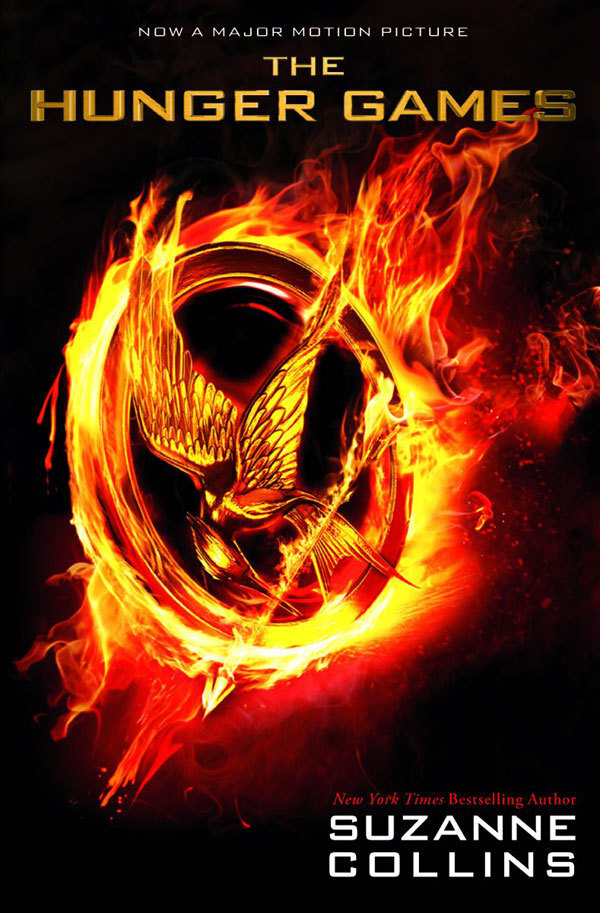
The first *Hunger Games* movie, released in 2012, is based on the bestselling novel by Suzanne Collins. Set in a dystopian future where the nation of Panem is divided into 12 districts, the film follows Katniss Everdeen, a young woman who volunteers to take her sister’s place in the annual Hunger Games. The Games are a brutal televised event where 24 "tributes" fight to the death, and only one survives. As Katniss enters the arena, she must rely on her instincts, cunning, and her growing bond with fellow tribute Peeta Mellark to survive the deadly competition. The film explores themes of survival, sacrifice, and the dehumanizing effects of power, while also showcasing Katniss’s transformation from an ordinary girl into a symbol of resistance against the oppressive Capitol.
The second *Hunger Games* movie, *Catching Fire* (2013), picks up after Katniss Everdeen’s victory in the 74th Hunger Games, where she became a symbol of rebellion in the districts of Panem. As the 75th Hunger Games, known as the Quarter Quell, approaches, the Capitol announces that previous victors will be forced to compete again. Katniss and Peeta are thrust back into the arena, where they must face even greater challenges, both from deadly traps and other tributes, as well as the Capitol's increasingly oppressive regime. The film deepens the exploration of Katniss’s role as a symbol of resistance and the growing unrest across the districts. *Catching Fire* introduces new allies, including Finnick Odair and Johanna Mason, while intensifying the stakes of survival and rebellion as Katniss becomes a central figure in the fight against the Capitol’s tyranny.
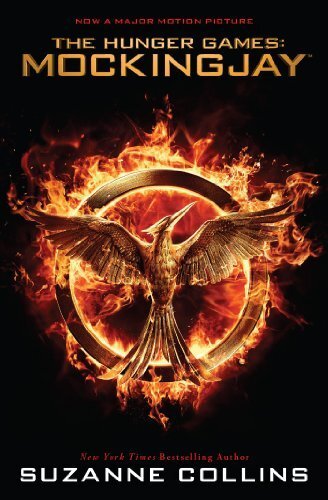
The third *Hunger Games* movie, split into two parts, *Mockingjay – Part 1* (2014) and *Mockingjay – Part 2* (2015), follows Katniss Everdeen as she becomes the reluctant leader of the rebellion against the Capitol. In *Part 1*, after surviving the 75th Hunger Games, Katniss is brought to District 13, where she reluctantly agrees to be the symbol of the revolution, the "Mockingjay." As she struggles with the emotional and psychological toll of war, she also faces the painful reality that her loved ones, especially Peeta, are still in the Capitol’s grasp. Meanwhile, the rebellion grows in strength, and Katniss is pushed to the forefront as both a symbol and a weapon. In *Part 2*, the rebellion intensifies as Katniss and her allies prepare to launch a final assault on the Capitol. As they move toward the ultimate confrontation, Katniss grapples with her feelings for both Peeta and Gale, while also confronting the brutal realities of war. The final film brings Katniss's journey to a climactic and emotional conclusion, with her role in ending the Capitol's reign and shaping the future of Panem at the heart of the story. The two parts together explore themes of power, sacrifice, and the moral complexities of rebellion, with Katniss emerging as both a survivor and a leader.
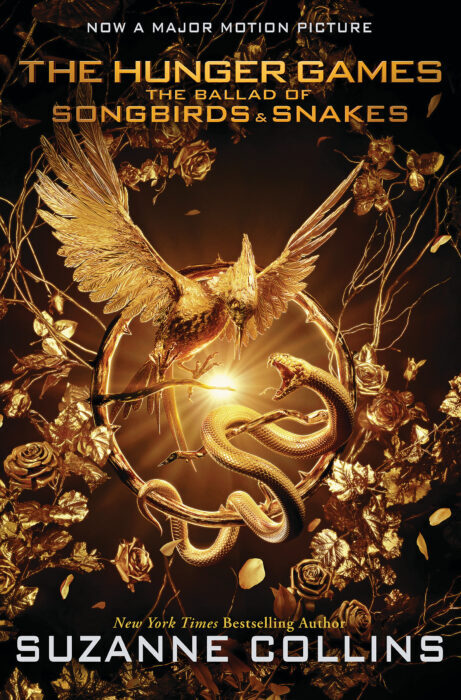
*The Ballad of Songbirds and Snakes* (2023) is a prequel to the *Hunger Games* series, set decades before Katniss Everdeen’s time. The film follows a young Coriolanus Snow, who will later become the tyrannical president of Panem. In this story, Snow is assigned to be the mentor for a tribute from the impoverished District 12 during the 10th Hunger Games, an event still in its early, brutal stages. His tribute, Lucy Gray Baird, is a charismatic and resourceful singer who captures the Capitol’s attention, and Snow sees her as his ticket to restoring his family’s crumbling status. As Snow navigates the political intrigue of the Capitol and his growing relationship with Lucy Gray, the film explores themes of power, ambition, and the moral compromises that shape Snow’s transformation into a ruthless leader. *The Ballad of Songbirds and Snakes* delves into the origins of the Hunger Games themselves, showing how the event evolves into the annual spectacle we see in the original series, while also shedding light on the complex character of Snow before he became the oppressive figure fans came to know.